

Project 2
Paper folding
Part 1 (intro)
The intention of this project was to utilize the terms defined below to transform a singular constant sheet of 14x17 white Bristol paper into a three-dimensional form that could be used to conceptualize design. Our new project had to be within an 8x8x8 size limit which proved to be difficult with the sheer size of the Bristol paper. However, with these verbs we were tasked to create a form that was both intentional and demonstrated the natural working of our minds.
Fold: to turn the paper over itself at a crease increasing the thickness at that point
Pleat: Fold in rapid and alternating succession creating a fan like shape
Crease: to create a change in the paper's direction resulting in permanent change to the memory of the paper
Press: To increase pressure on a part of the form (often a crease or fold) in order to increase the magnitude of the action
Score: To use a blade in order to create a weak point on the paper with the intention of getting a clean fold or crease
Cut: To use a sharp object to separate parts of the form in a clean manner
Pull: To use pressure in one direction with the intention of changing the form of the paper in such direction
Rotate: Spinning the fold or object around on an axis to shift perspective
Turn: Changing the direction of the folds or action in order to alter the form
Wrap: manipulating the form around a focal point
Compress: To increase the density of folds or creases with the purpose of improving the consistency of the piece
Balance: Utilizing two sections that without each other could not support weight together to support the form
Unfold: Removing the intensity of the fold in order to change the form
Twist: Shifting the direction of the face of the plane in the form in order to create tension
Enfold: To cave the structure in on itself with the purpose of creating physical and visual depth
Pierce: For one part of the form to go fully through another part of the fixed form
Hinge: For a crease or score to be used to create a moving partial of the subject
Knot: To make pieces of the form interlock without damaging or impacting another
Weave: Interlocking strips of the subject in a consistent pattern for visual appeal and structural soundness
Cut-Pull-Wrap-Pierce-Pleat
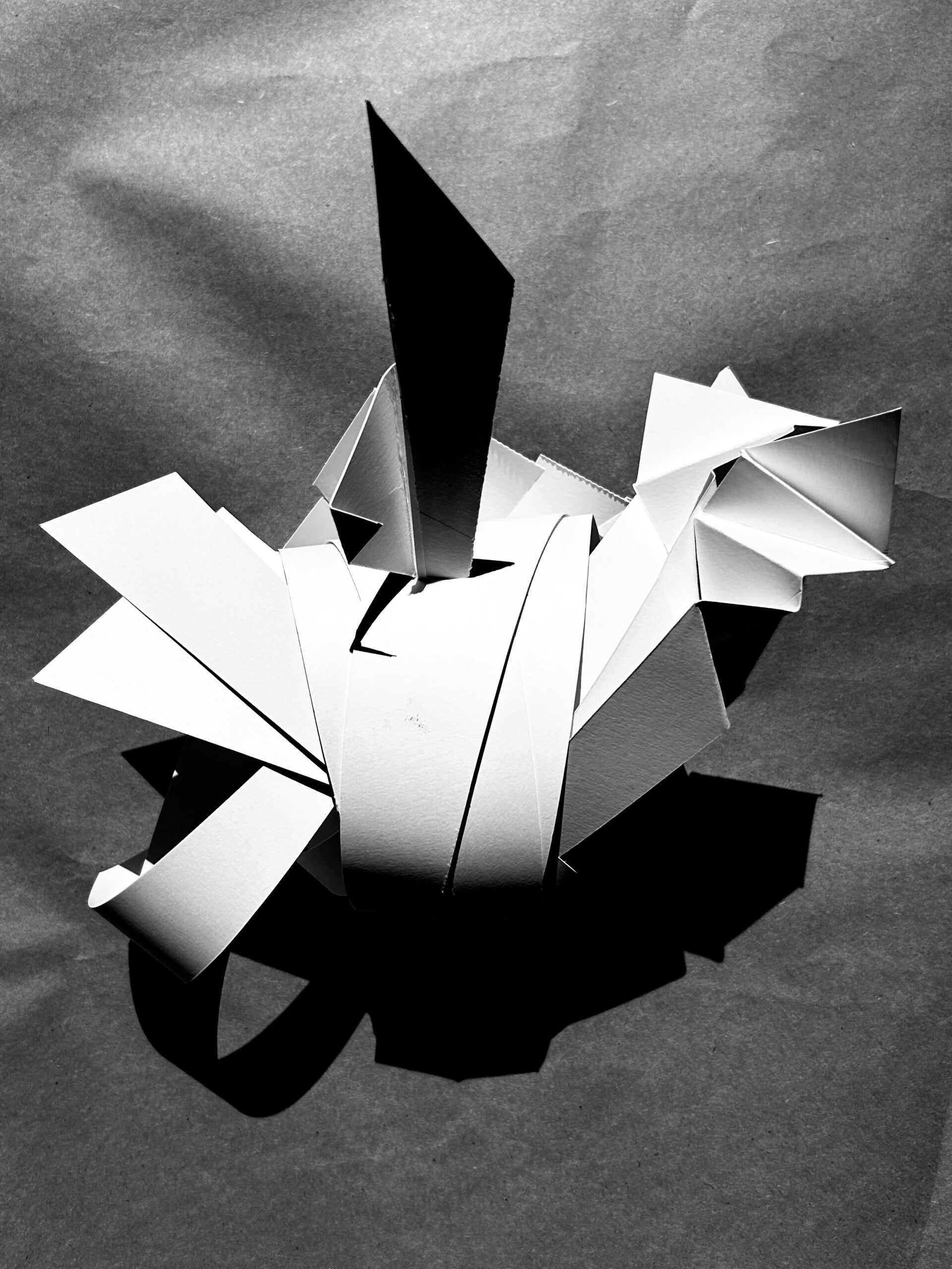
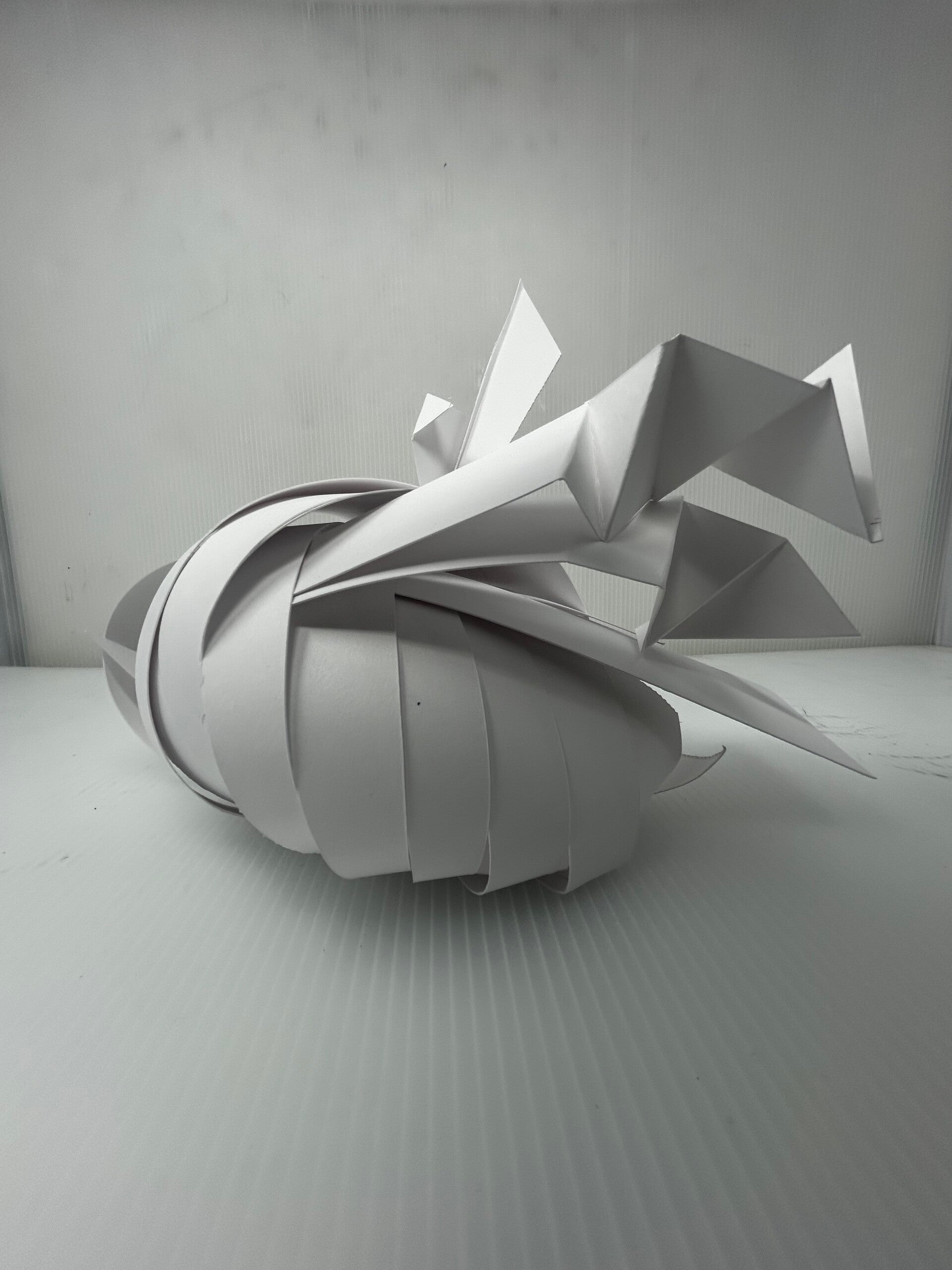
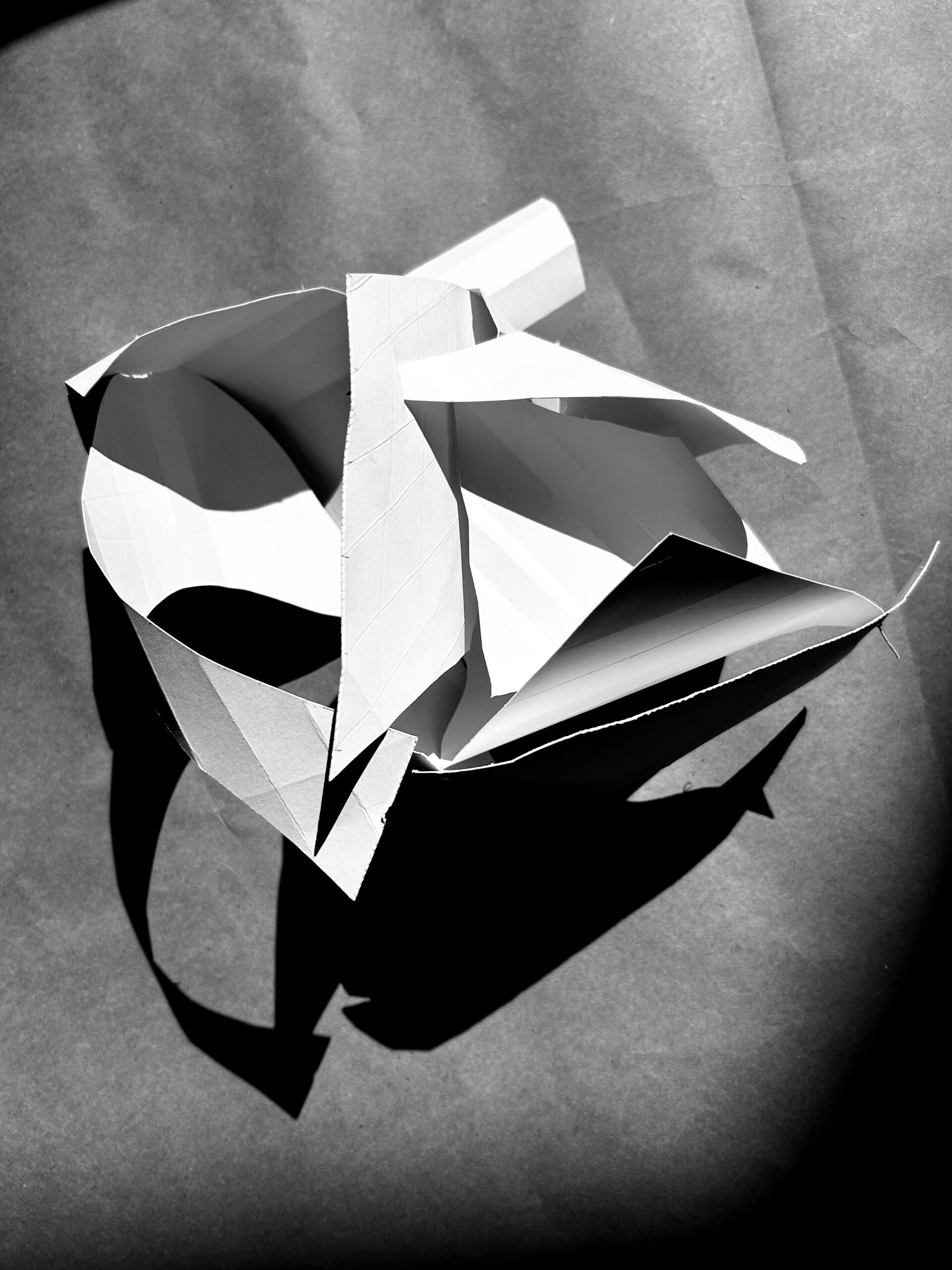

Crease-Pleat-Cut-Enfold
Fold-Wrap-Press-Twist
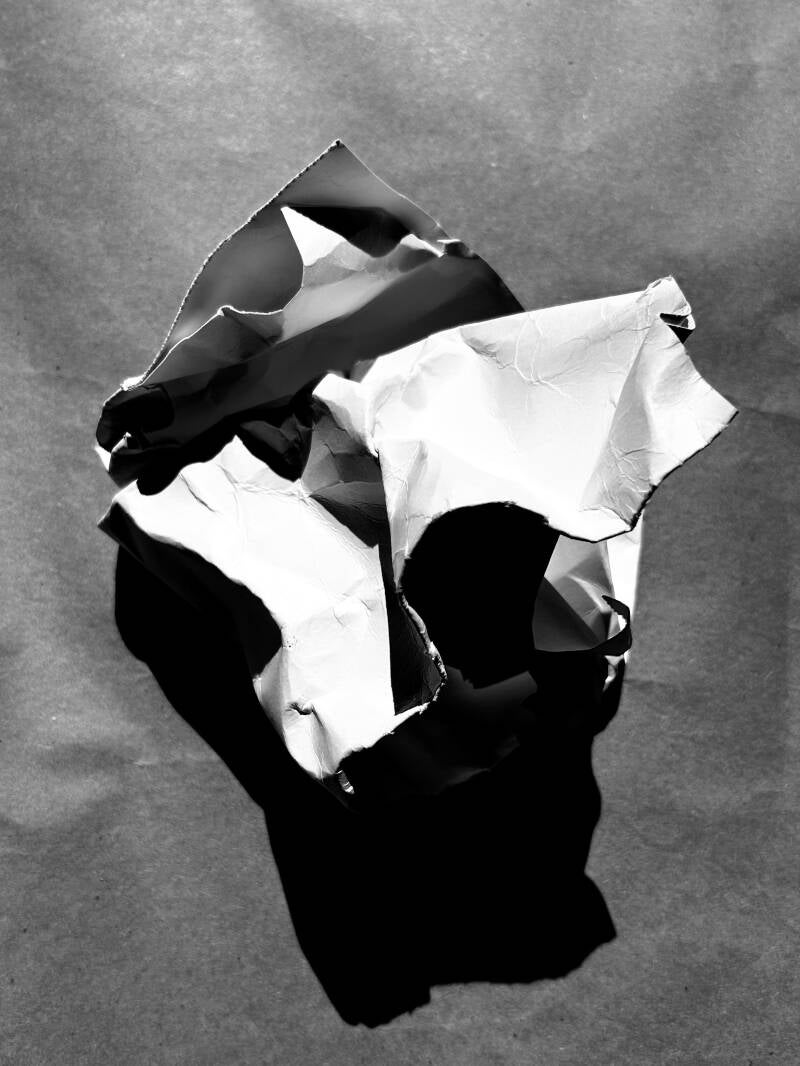

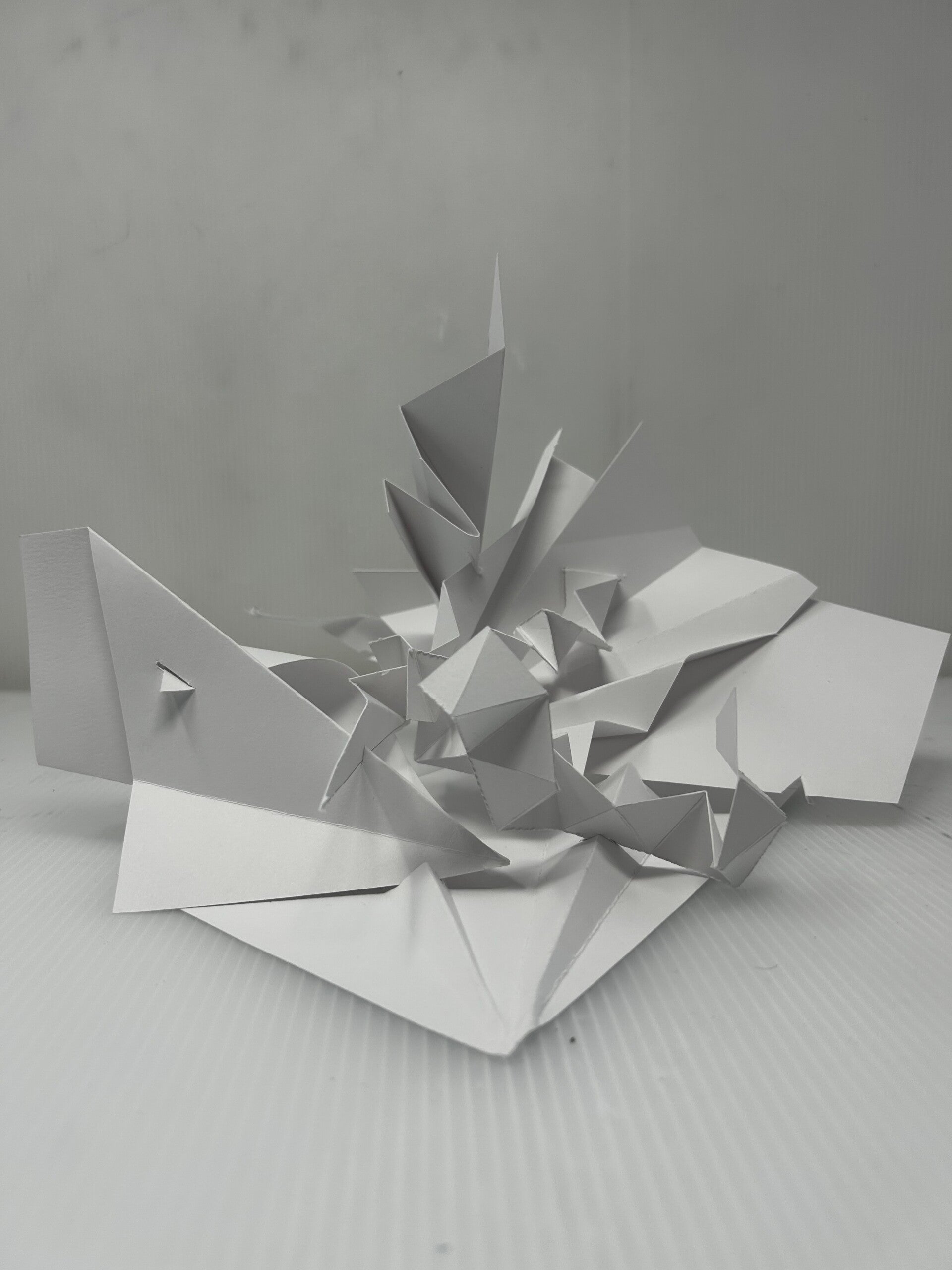
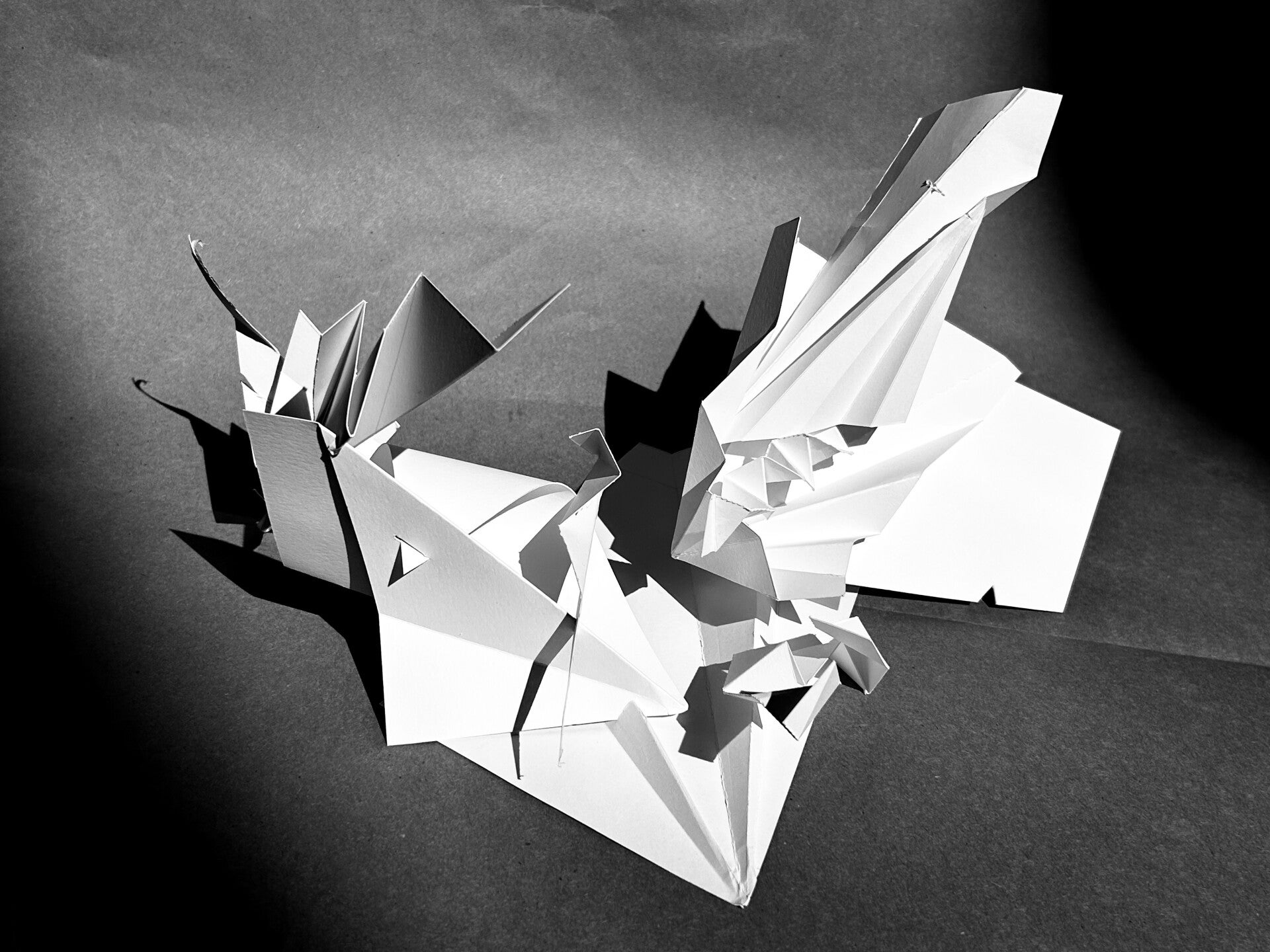
Cut- Pleat-Crease-Compress-Pierce
Fold-Hinge-Rotate


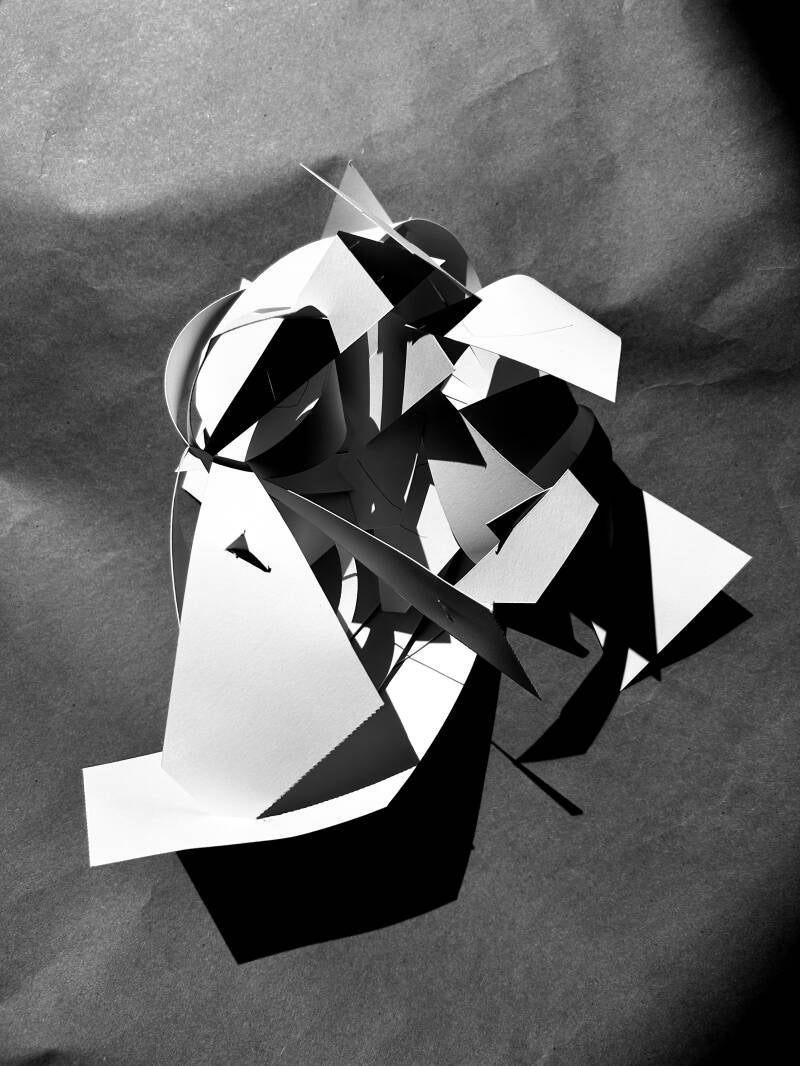
Pull up- Cut- Enfold
Reflection->
Throughout this project the primary complexity has been the sheer size of the paper. To take a one-dimensional plane and compress it into a three-dimensional complex form is an incredibly challenging task. However, the utilization of the different concepts proved to break down this task into manageable challenges. When you go from technique to technique it makes the new form appear organically and mechanically. This therefore results in a more cohesive project. In multiple of my pieces, I did not go technique by technique and instead I attempted to create my form rather than practice concepts. This resulted in less impactful and less natural pieces. However, when I went practice by practice with the idea of using a new concept rather than focusing on the eventual model, I ended up getting projects that not only were more visually appealing but also more reflected how my mind worked throughout the process. This is almost certainly a result of our brain’s natural neuron connection, working through the process results in our brains seeing logical and beautiful patterns we otherwise would not be able to conceptualize.
Part 2
Introduction
Where before we were required simply to create a form with our paper, we now had to take new concepts in tandem with the old to curate space within the form. The space had to be broken by the paper and structured purposefully with the intention of creating a mathematical and logical form. This space didn't need to have a foundation to it giving us the opportunity to orient it in any way we wished.
Composition one
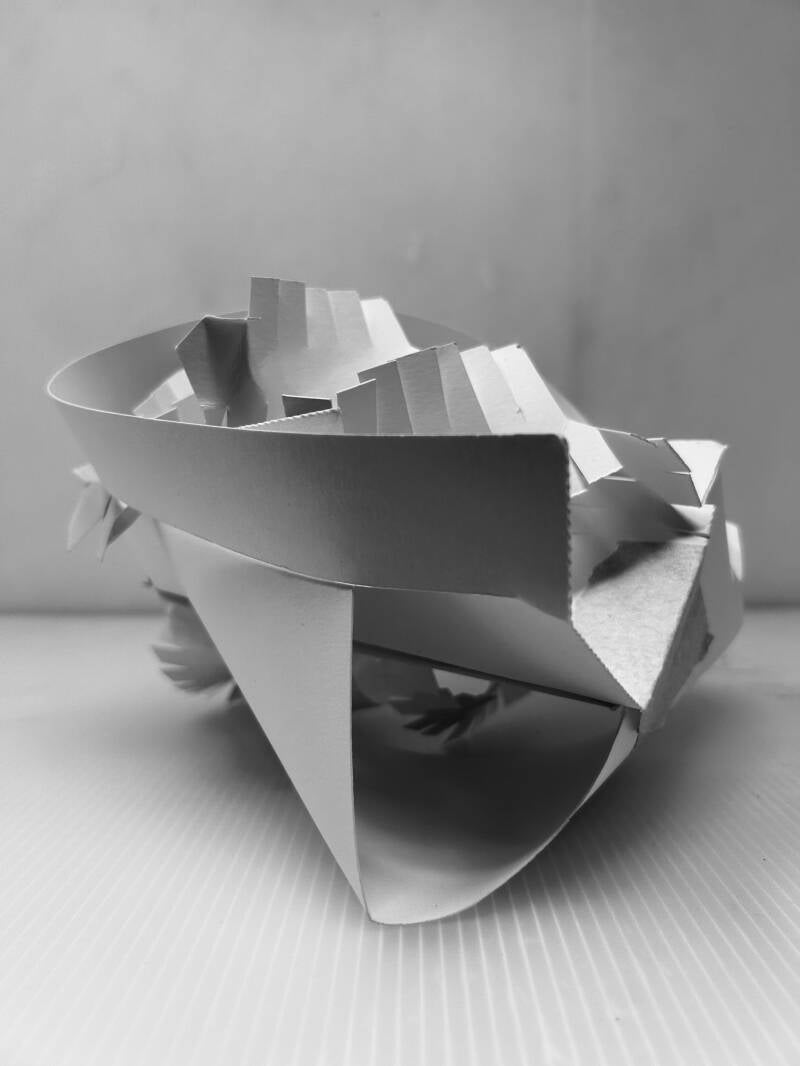
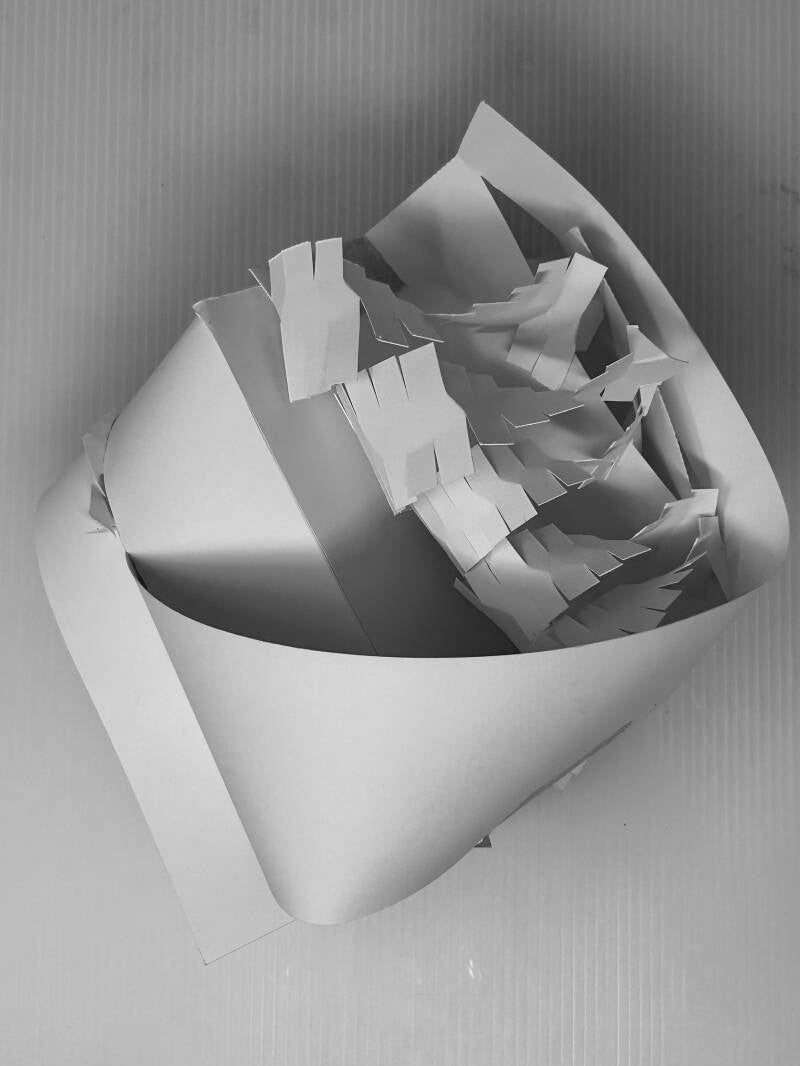
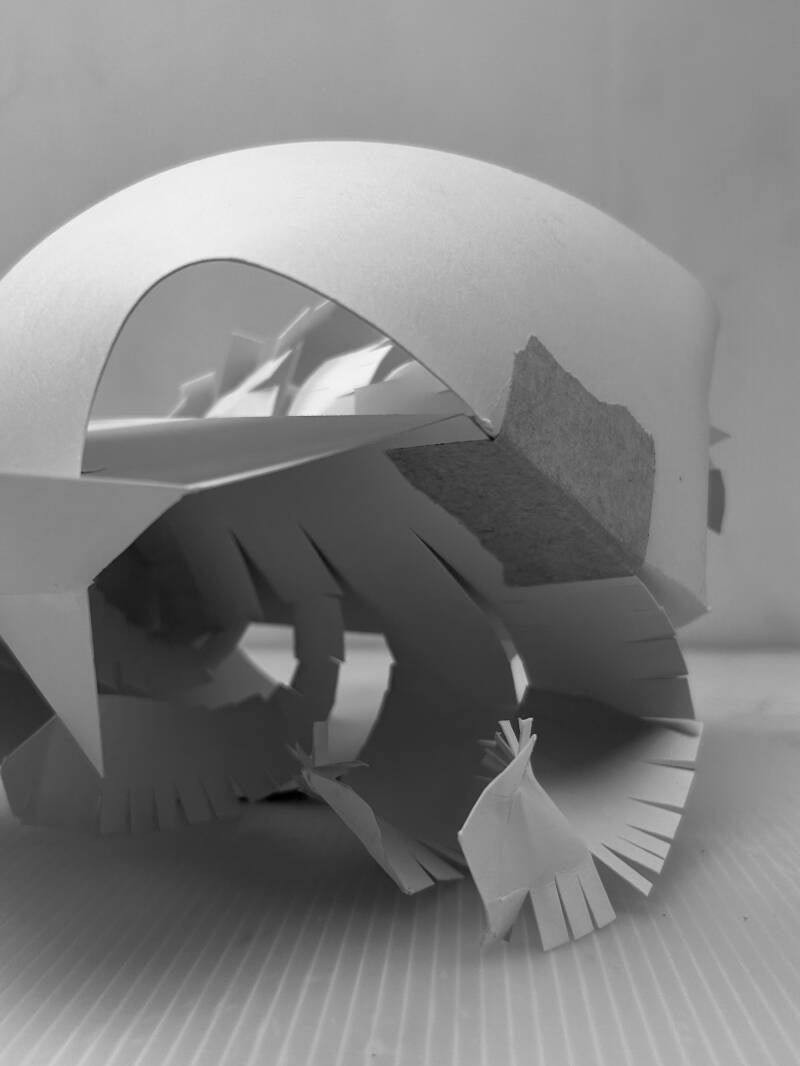
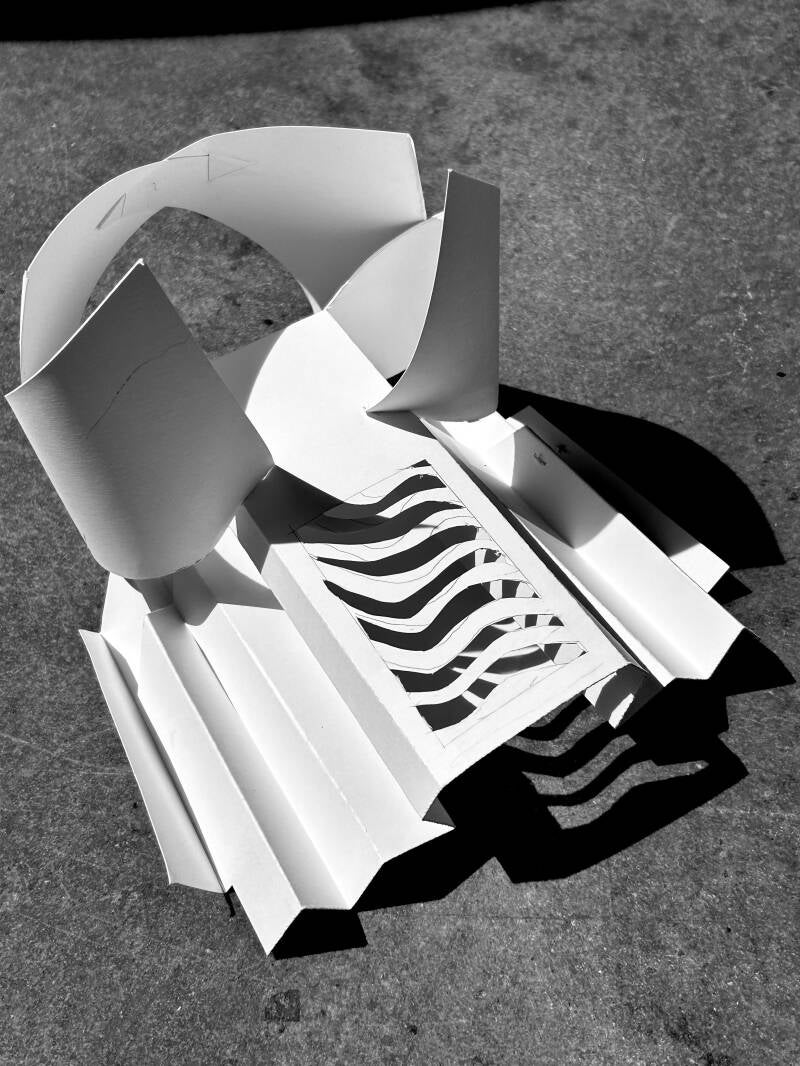
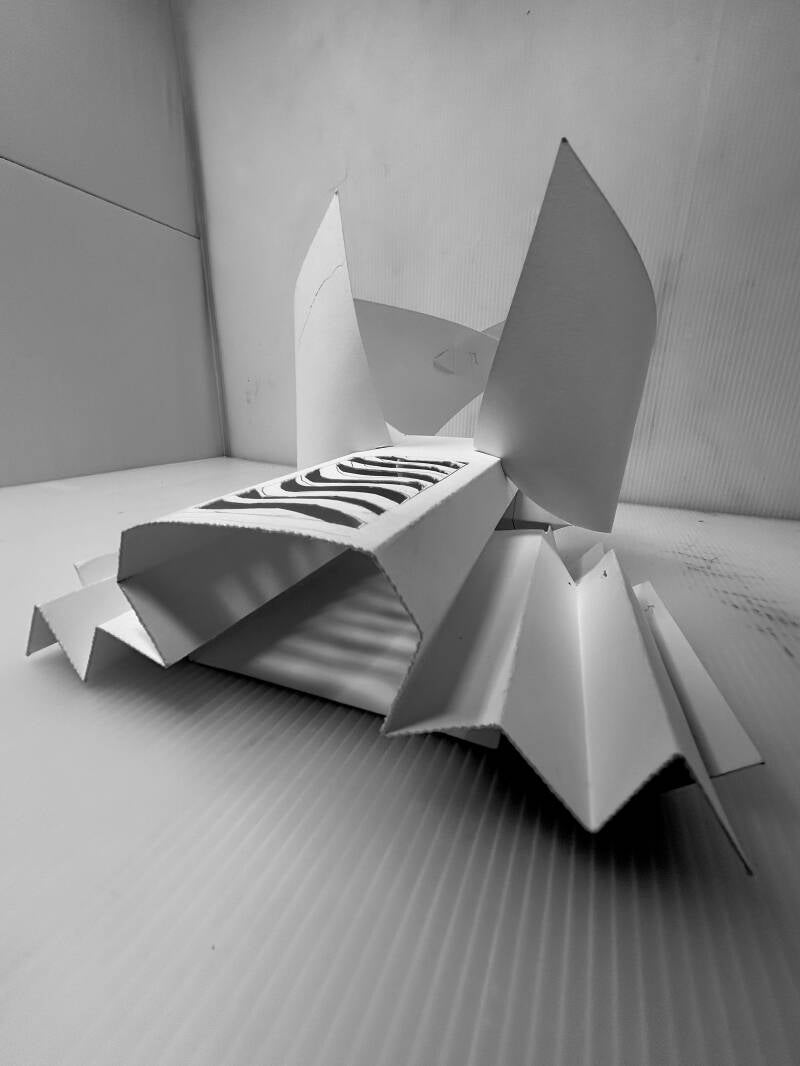
For this composition I wanted to have a central plane enveloped by the rest of the form. I measured a rectangle within the center then cut the paper into two sections connected by the center. I then folded those sections until they both mirrored the other. Then I cut strips from each section, perforated those strips and pulled them into the adjacent wall to pierce it and hold a twisting form. The remaining wall was then pulled around and into the initial center plane to create a mirrored and balanced form which could be observed from any angle.


Composition two
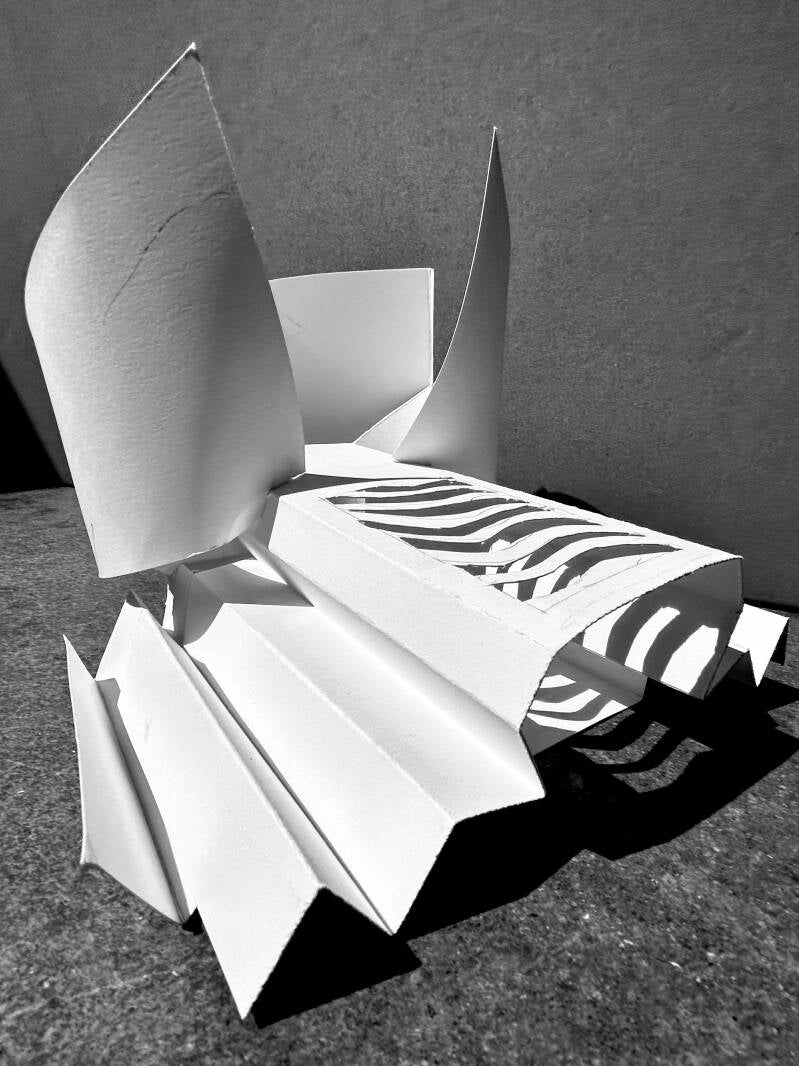
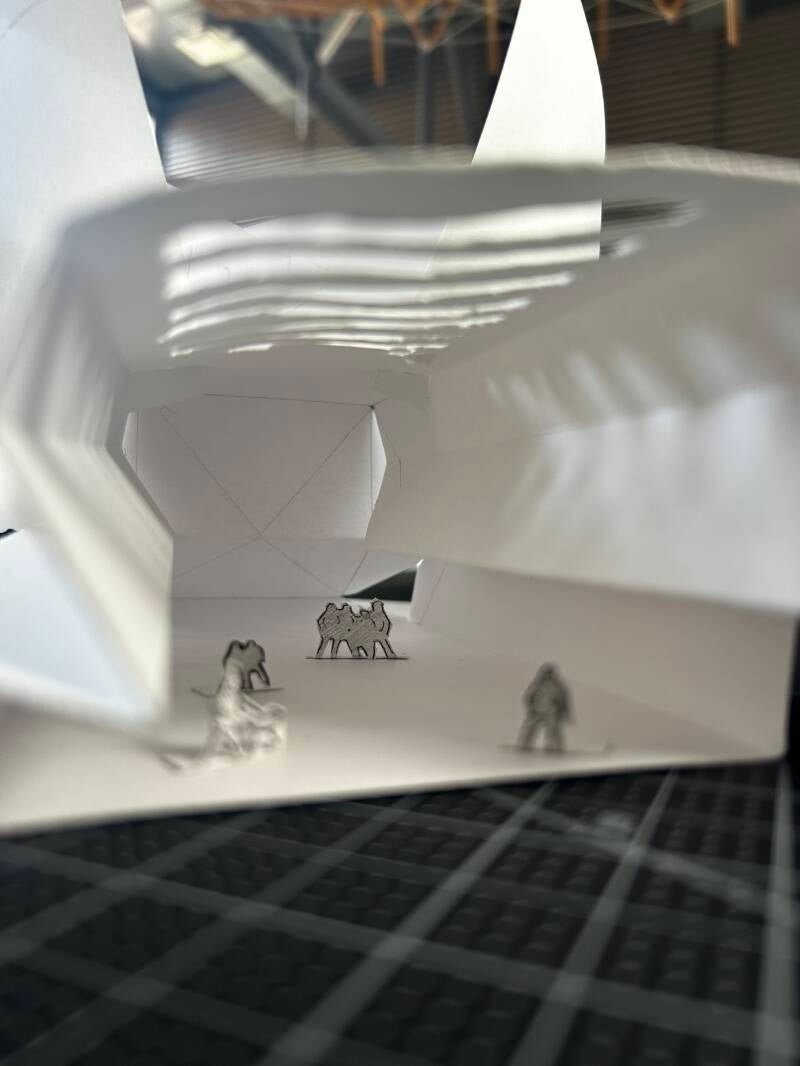
I wanted to surround one concept (pleating) with another (twisting). So, I found a center point and cut out four different sections. Two of these sections were pleated and folded towards each other and the other two were pulled towards the structure formed by the pleats and inserted in to hold their structure. I then perforated the top of the structure in order to allow for more complex shadows and a more visually entertaining form.
Reflection->
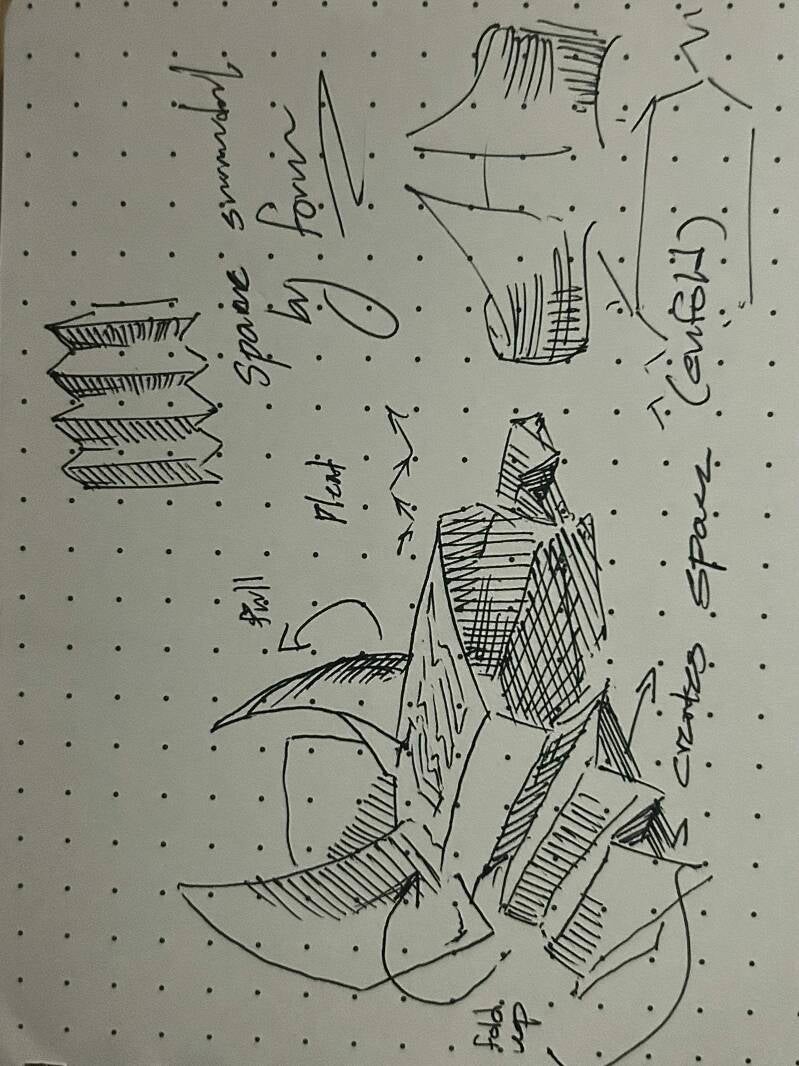
Livable space is created within a form. For both of my compositions I took a center plane and surrounded it with the space. This resulted in a naturally growing form without needing my full plan to work out, the composition composed itself. One shortcoming of my secondary composition was its nature as a building and not as a form. It is unable to function well at different perspectives or orientations however this gives it a solid foundation and prepared me well for part three.
Part 3
AFFORDANCE
Within that space previously created and aside the form is the area created for humans to exist within. Space cannot just be open it has to have a purpose, and this purpose is facilitated by the form around it, inviting individuals to interact with or within the space. This final part asked us to introduce that Affordance by combining the previous two concepts with the central purpose of allowing for individual interaction and to provide for their needs (Pavlov's hierarchy of needs).
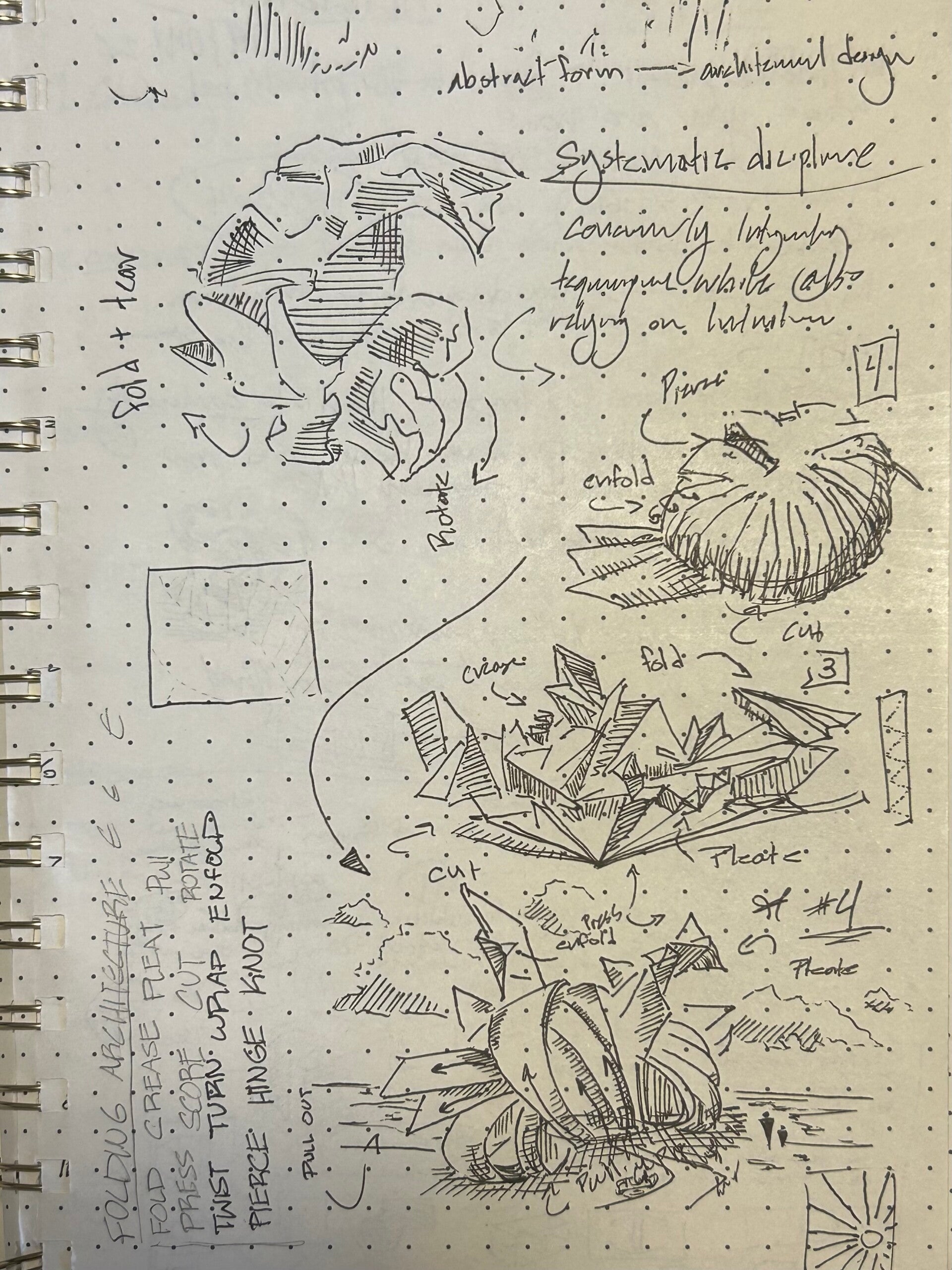
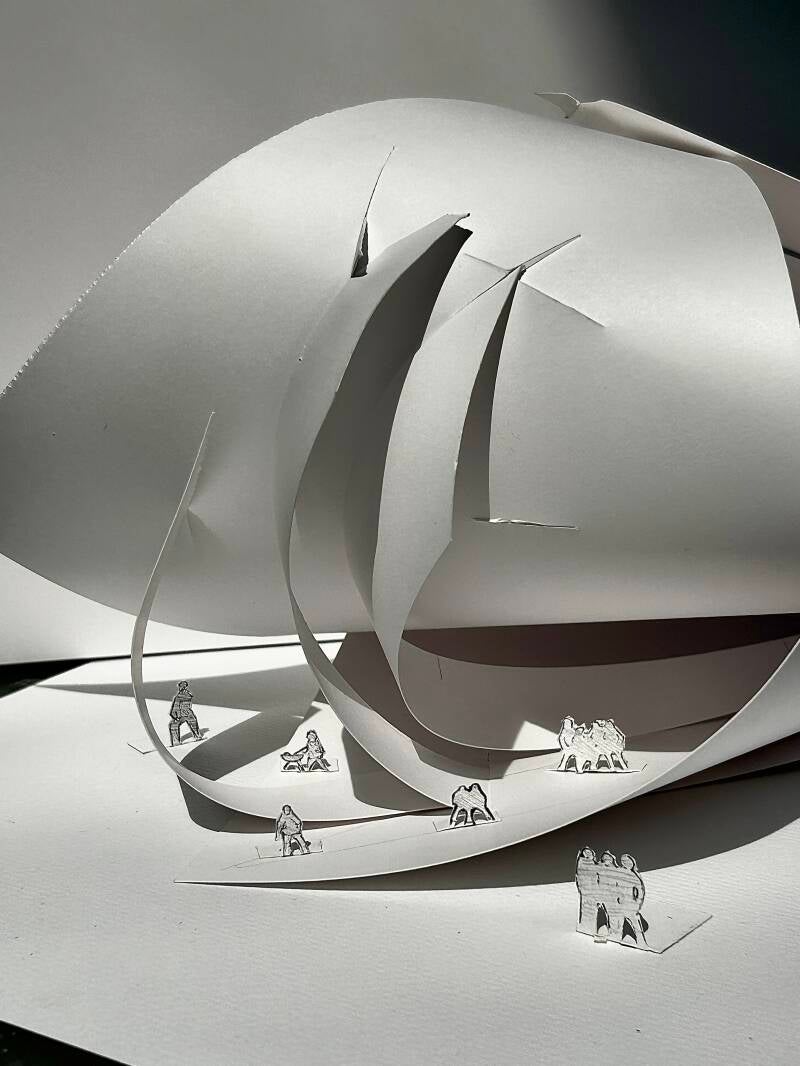
In order to create this piece, I took from part two (space) and decided to start with a central space and have my form surround it but allow for open space. I cut strips out of two planes which all folded in to create a space that both allows for human entry down low and the entry of sunlight from above. The composition at a 1/32nd scale becomes a large area, suitable for mass interactions or rest, however when brought to a 1/8th scale it then becomes a room to allow for comfortable existing. The figures in scale put into perspective how they would interact with the space, in groups or as an individual.
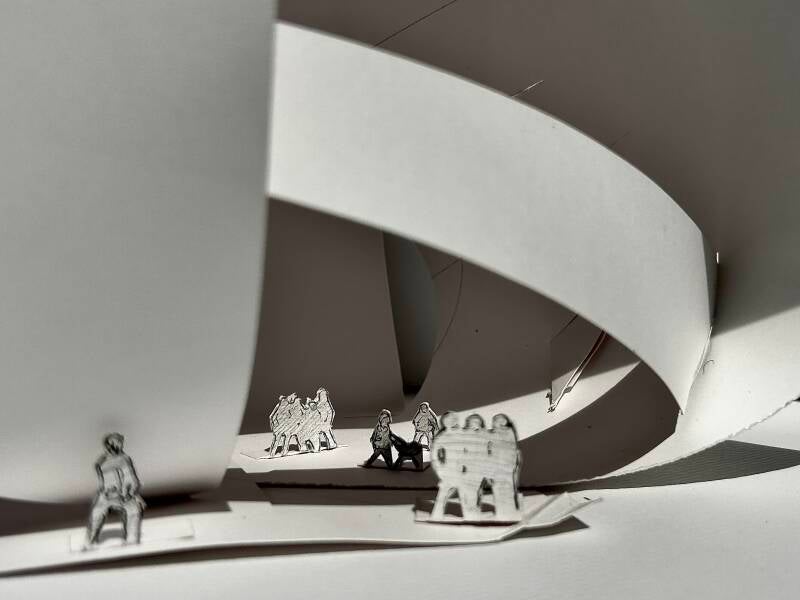
3/32nd scale figures
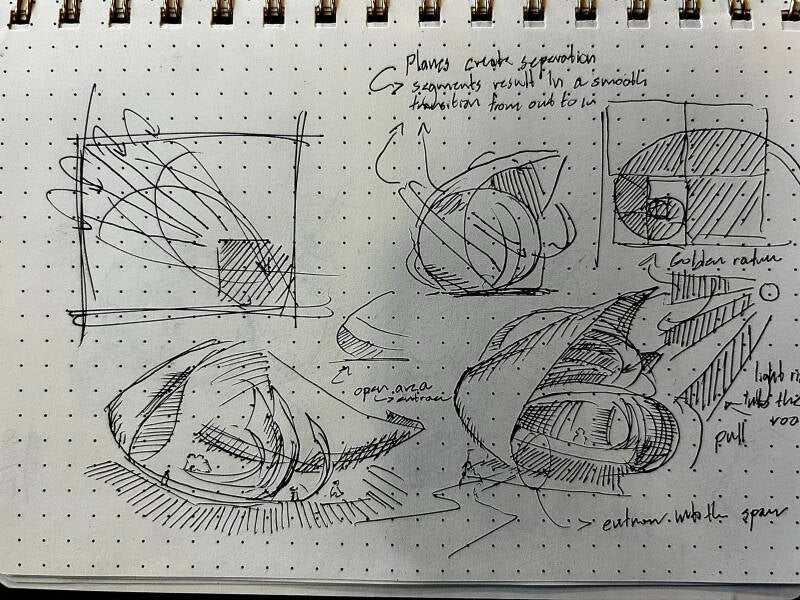
Concept sketches (top left is the cuts and actions upon the sheet of bristol)
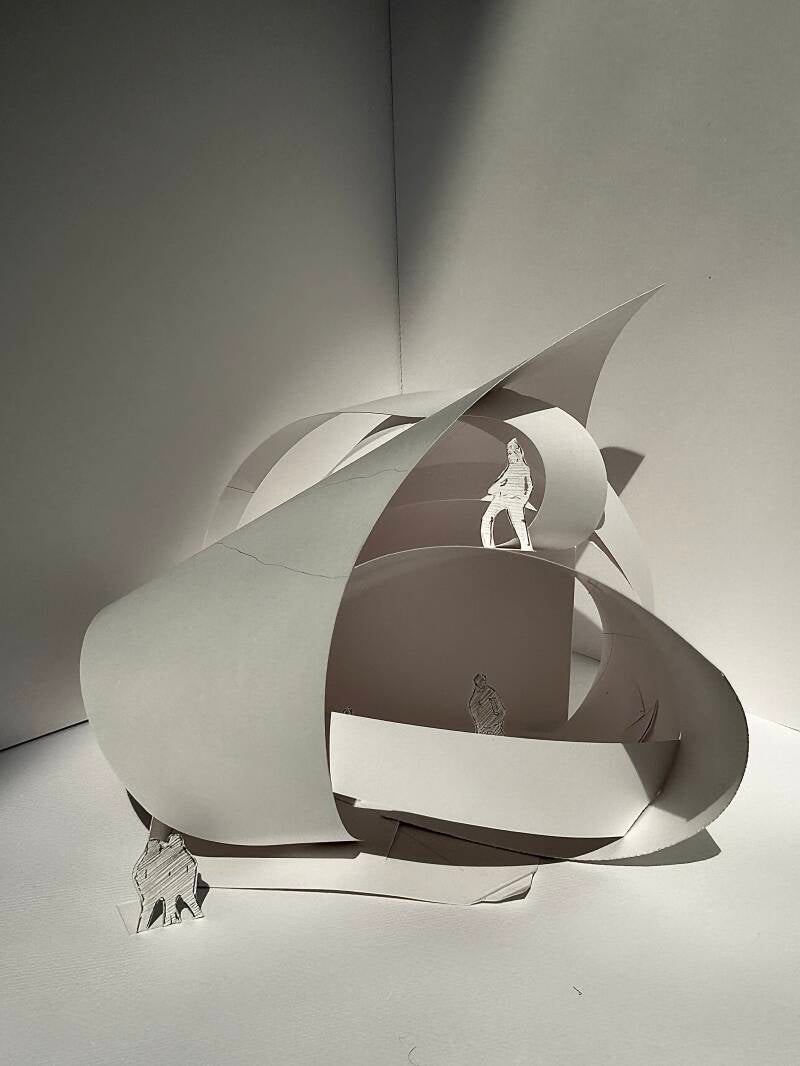
1/8th scale figure
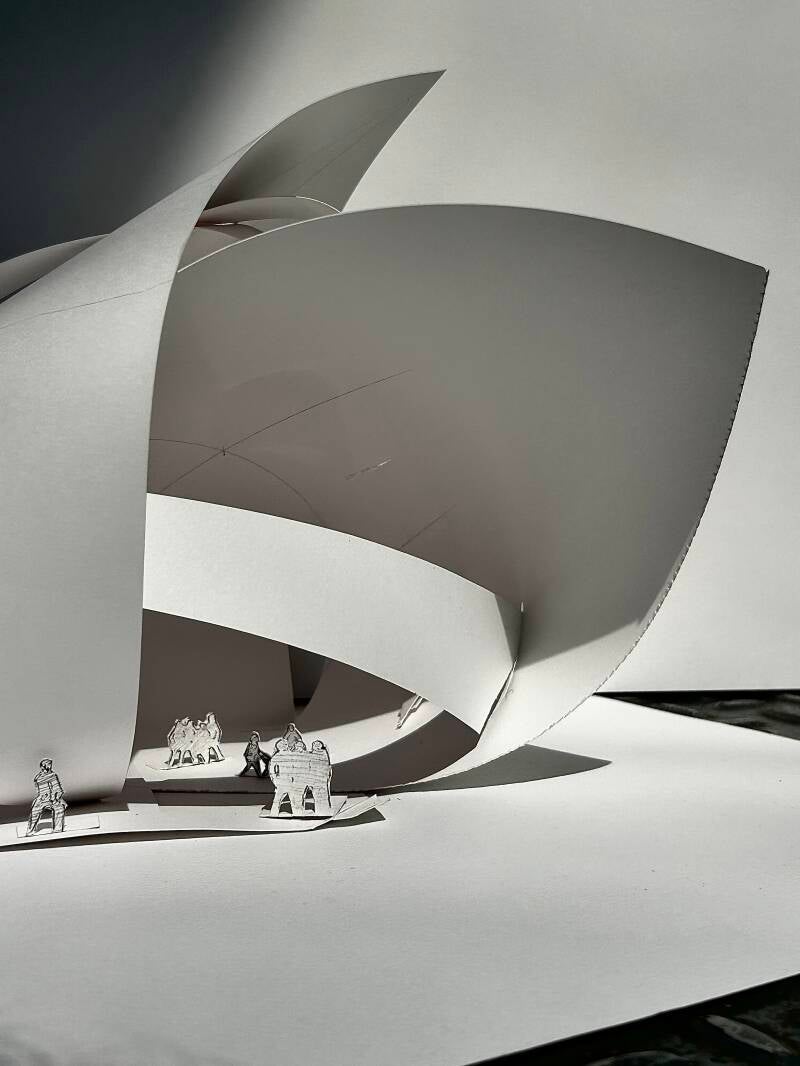
3//32nd scale
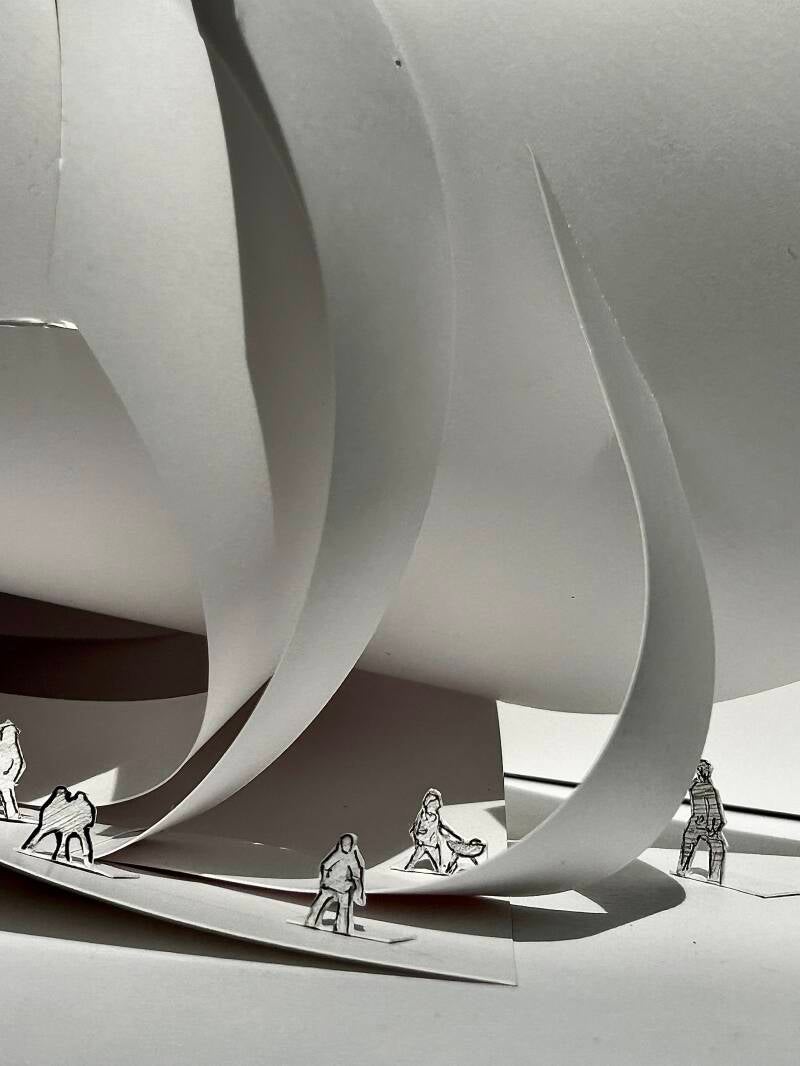
3/32nd scale
Overall Reflection
Create Your Own Website With Webador